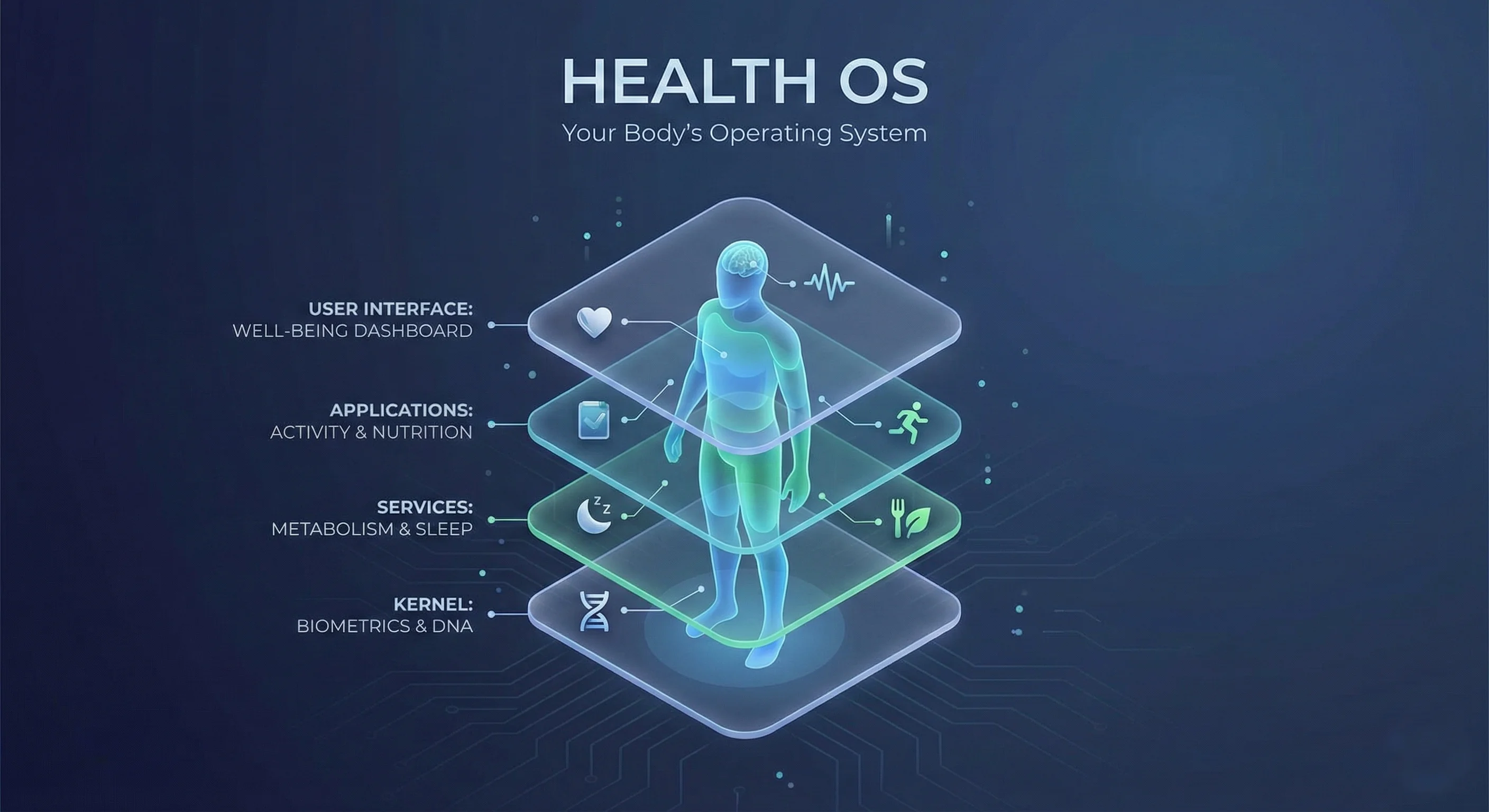
Nutrition Is Not the Problem — Execution Is
Why Most Diets Fail Even When People Know What To Do
Nutrition is not failing because of a lack of information. It is failing because information alone does not translate into consistent execution.
Today, the average person knows more about nutrition than any generation before them. Calories, macros, intermittent fasting, low-carb, plant-based, Mediterranean — the knowledge is everywhere. Yet obesity, metabolic disease, and weight instability continue to rise globally. This contradiction exposes a hard truth:
Knowing what to eat is not the same as doing it consistently.
Most people do not fail at nutrition because they are ignorant. They fail because modern life makes execution fragile.
The Real Enemy: Decision Fatigue
Every meal requires decisions:
- What should I eat?
- How much should I eat?
- Is this within my plan?
- Did I already eat too much today?
Each decision consumes mental energy. Humans are not designed to make dozens of high-quality decisions every day forever. Willpower depletes. Stress interferes. Social environments disrupt plans. What starts as discipline slowly erodes.
This is why most diets fail after a few weeks, not on day one.
The failure point is not motivation. It is cognitive overload.
Why Motivation-Based Diets Collapse
Motivation is emotional. Emotions fluctuate.
- Stress overrides discipline
- Social events override plans
- Fatigue lowers resistance
- "Just today" becomes a habit
A plan that depends on constant motivation is fragile by design.
Systems, on the other hand, do not rely on how you feel. They function regardless of mood, energy, or circumstances. This is why industries scale with systems, not motivation.
Health should be no different.
Nutrition as a System, Not a Plan
A plan assumes perfect compliance.
A system expects
deviation and corrects it.
Systems:
- Reduce choices
- Lower friction
- Create feedback loops
- Adapt automatically
A system does not ask you to be perfect. It only asks you to stay inside a structure.
This is the difference between hoping for results and engineering them.
The Execution Gap
Most people already know what works:
- Eat within energy limits
- Prioritize protein and nutrients
- Be consistent
- Track progress
What they lack is an environment that enforces these behaviors when life intervenes.
The execution gap is not about effort. It is about structure.
Nutrition does not fail people. Unstructured execution does.
Why Systems Win Long Term
Every reliable outcome in modern life is system-driven:
- Financial markets
- Manufacturing
- Software infrastructure
- Aviation safety
Health has lagged behind because it has been treated as a personal willpower problem instead of a systems problem.
When nutrition becomes a system — measured, adjusted, reinforced — results stop depending on mood and start following logic.
That is the shift modern health requires.
The Takeaway
If diets keep failing, the problem is not you. The problem is that you were given instructions instead of a system. Execution is the missing layer. Fix execution, and nutrition starts working.